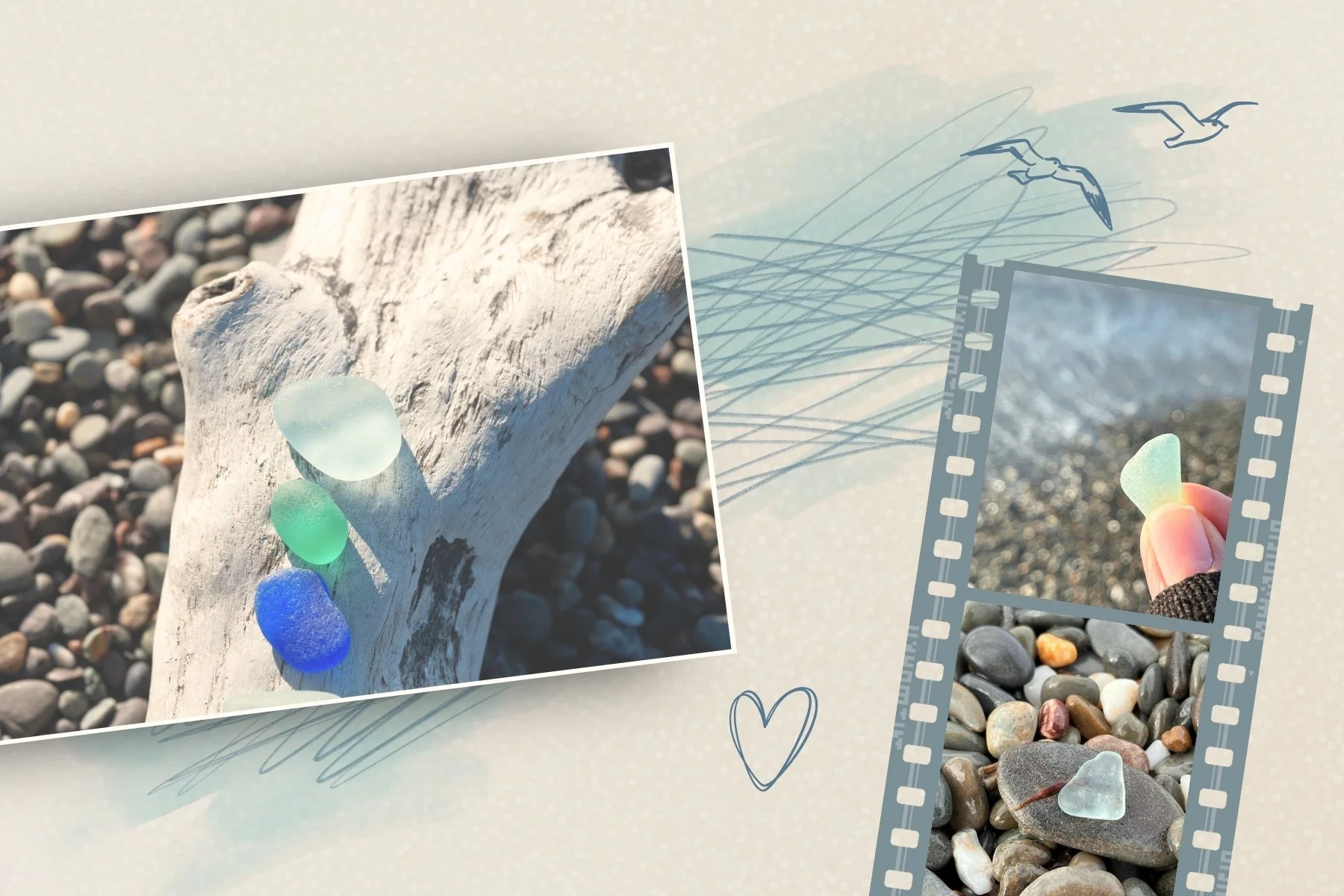
There is something quite magical about searching for sea glass along the British coastline. Those tiny, colourful fragments of frosted glass, smoothed and softened by years of tumbling amongst the waves, are little pieces of treasure waiting to be discovered. From pale aqua blue and soft greens to deep blues and amber, and the occasional rare red, every piece of sea glass has its own story to tell.
Where are the best places to find sea glass in the UK?
The secret is to look for pebble and shingle beaches, especially those with a mix of small stones, shells and coarse sand. These beaches provide the perfect conditions for the waves and pebbles to gently tumble any discarded glass. Over time the sea will gradually smooth its sharp edges into the beautiful, frosted pieces us collectors love to find. Older coastal towns, fishing villages and beaches close to historic harbours can be especially rewarding, as they may have a longer history of glass washing ashore. Beaches like Seaham Hall Beach on Durham’s Heritage Coast, provide a sea glass collectors paradise due to its connection to Seaham’s Londonderry Bottleworks during the Victorian and Edwardian eras. The works produced a variety of hand-blown bottles for perfumes, drinks and household products, any waste or imperfect glass was discarded into the North Sea.
Collecting sea glass is a wonderfully relaxing and rewarding way to explore some of our beautiful beaches here in the UK. Whether you are strolling along the rugged shores of Cornwall, searching the pebbled beaches of the South Coast or discovering the hidden coastal gems of Scotland and Wales, timing can make all the difference to what you might find.
When is the best time to collect sea glass in the UK?
Every season offers something different for a sea glass hunter. Autumn and winter are often considered especially rewarding, as stronger winds and stormier seas can wash up new pieces of sea glass. Spring is a nice time of year to search the beaches after a spell of unsettled weather and when the spring tides move more debris. Summer offers calmer conditions, long days and more comfortable conditions for beachcombing.
Whether you are a seasoned sea glass collector or just beginning your coastal treasure-hunting adventure you will need to understand the tides, the weather and the seasons if you are to make the most of your visit to the beach. I find that low tide is usually the best time to search the shoreline, as the sea retreats exposing more of the beach and leaving fresh pieces of sea glass behind. Others prefer to search the beach an hour or so after high tide, walking up and down the beach as the water recedes in search of deposited sea glass. Whichever your preferred method you will need to learn to read the beach.
Understanding the beach
Sea glass does not spread itself uniformly along the beach. As you spend more time searching for sea glass at different beaches you will soon learn how to look for clues that may reward you. If you visit the same beach regularly you will quickly learn how the tide tends to flow and where it deposits materials, if you are not familiar with a beach it is worth taking a few moments to survey what is happening along the shoreline before you start your search for glass.
Here are a few things I like to look for when I am out collecting. Sea glass collects among small stones and pebbles rather than sand. Look for sea glass amongst the shingle, around rock pools and any areas where the smaller pebbles collect. Look for natural inlets and coves which bring sea glass in on the tidal currents. As you survey the beach look for the lines of seaweed, shells, driftwood and other debris bought in by the tide. These wrack lines are often a good place to find pieces of sea glass that have been deposited here as the tide retreats. As you walk along the beach look for pebble ridges, these are formed by the wave action of the sea. As the sea swirls around these pebble ridges the sea glass becomes trapped amongst them. Another good place to look for sea glass is around and between the groyne structures built on the beach to help prevent erosion. Groynes slow the action of the sea and often deposit small pebbles, shells and sea glass. Watch the movement of the tide, where is debris collecting? Where are the smaller pebbles being deposited? You will soon come to realise that the beach naturally sorts objects by size and weight. You will naturally find tiny fragments of sea glass among similar sized fragments of shells and pebbles, whereas the larger pieces of glass can be found amongst larger sized pebbles.
Finding Sea Glass
Now that you have an idea where to look for sea glass, here are a few tips on how to find that elusive needle in a haystack.
Move slowly along the beach, you should be scanning the beach as you walk along, reading each section as you pass by. I like to move in a zigzag pattern between the tide lines of debris. This way I cover a greater area of the beach, this increases my chances of finding glass. You may need to crouch down to search an area. Sometimes it is easier to find sea glass the closer you are to it. I love collecting sea glass with my Grandchildren, they always seem to find more than me, and I am convinced it is because they are closer to the ground! Finding sea glass can take time, you will need to be patient. As you spend more and more time sea glass hunting you will learn how to train and focus your eyes so that you spot the beautiful frosted pieces of glass among the pebbles. It is a good idea to look slightly ahead of you as you scan rather than looking directly down at the ground. I find it easier to spot the glass pieces when the sun is behind me, that way the light catches the surface of the glass making it stand out from the stones. A little trick I have learned is to wear my sunglasses as I gently walk the shoreline! Unless it is a particularly dark day I find that wearing my ‘sunnies’ makes the shiny glass glisten.
Ethical Sea Glass Hunting
Whether you are an avid sea glass hunter, a complete novice or someone who just enjoys the coast, why not get out there this weekend and see what you can find. All you need to do is research your local beaches, check the tide timetable, wear appropriate footwear/clothing and grab a foraging pouch. You never now you might just get hooked. Please remember that responsible sea glass hunting is important and follow the following guidelines.
Take only what you need. Leave behind plenty of glass pieces for other hunters and to maintain the natural character of the shoreline.
Never dig of destroy. Do not dig into sand dunes, break rocks, pull apart sea walls or coral reefs. This causes erosion and destroys animal habitats.
Leave unready glass. If you find a piece of sea glass with sharp edges and a glossy, unfrosted surface. Throw it back to the sea and let the waves tumble it for another ten years or more.
Take any rubbish home with you. In the UK sea glass is classified as man-made waste rather than a protected natural material. By picking it up you are actually helping to keep our UK beaches clean. Why not bring an extra bag with you and collect any pieces of plastic and general litter from the beach. Our sea life will thank you.
Most of all have fun and enjoy the process.